Leading the Personalised Cancer Therapeutics Laboratory at the Garvan Institute for Medical Research, Professor Pajic's research focuses on developing new, more effective and tailored treatments for pancreatic cancer. As well as understanding detailed genetics of the cancer, she is investigating how the environment around the tumour affects disease progression and resistance to treatments.
The Fellowship years
Cancer Institute NSW fellowships have been integral to Professor Pajic’s rise as an independent leader in translational pancreatic cancer.

Supported by an early career scholarship in 2010, she developed unique research infrastructure relating to cell lines and patient-derived models of pancreatic cancer. She also established a pre-clinical personalised medicine trials unit to test targeted therapies based on the biology of individual pancreatic tumours. This discovery research led to a personalised medicine clinical trial for people with pancreatic cancer.
Her early work has been widely used nationally and internationally, raising her profile and leading to important collaborations. For example, she was part of the consortium that undertook an in-depth analysis of pancreatic cancer genomes. This research identified four distinct subtypes of pancreatic tumours—analysis that guided future treatment and endorsed the personalised medicine approach.
Subsequent career development fellowships built on her seminal work, investigating the complex tumour microenvironment of pancreatic cancer. By looking at tumours in living tissues, she found that manipulating the environment around them could make the tumours more sensitive to chemotherapy. This discovery led to a collaboration with industry to find ways to prime pancreatic cancers for chemotherapy.
She also looked into how pancreatic cancers become resistant to chemotherapy. Having identified a gene that controls this chemoresistance and its role in regulating a common drug used for pancreatic cancer, in 2018 she was awarded an NHMRC Career Development Fellowship to investigate this further.
Professional growth
Professor Pajic’s work has played a major role in developing novel personalised treatment approaches for pancreatic cancer. Her research revealed the complex molecular landscape of pancreatic cancer and led to the development of a roadmap for identifying and testing novel targeted approaches.
“I published my most influential work during my fellowships. They also helped develop my leadership skills, including how to build and maintain a high performing team.
As a post doc, you don’t have to think about the long term. But as a fellow, you start to think about that and what people you need to help you succeed.”
In 2017, she won the Premier’s Awards for Outstanding Cancer Research Fellow, and was promoted to Associate Professor in 2020. In 2021, she was one of three researchers in Australia to be awarded a Snow Fellowship by the Snow Medical Research Foundation. This prestigious fellowship aims to develop Australia’s next generation of outstanding biomedical research leaders. In January 2025, she was promoted to Professor.
Current focus and future ambitions
As a Snow Fellow, Professor Pajic is focusing on the clinical translation of her discovery research. Over the eight years of her Snow Fellowship, she plans to partner with industry to deliver clinical trials that will lead to personalised treatments for people with pancreatic cancer. Long-term funding completely changed her outlook and how she has planned her research.
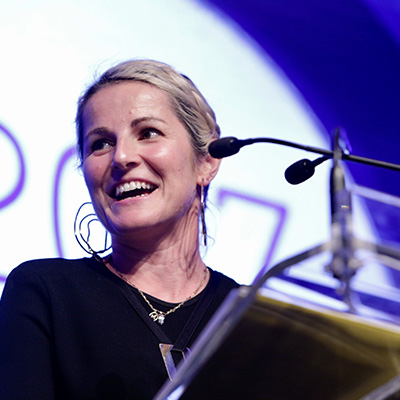
Advice to Early Career Researchers
“I wish I’d known earlier how important mentors are for your career. So, find good mentors who will look out for you and guide you. And you will need more than one. I was lucky that I had this, but it came later for me.”