Detect skin cancer early
Skin cancer is the most diagnosed cancer in Australia each year. It is estimated that 2 in 3 Australians are diagnosed with skin cancer by the age of 70 years.1
When a skin cancer is identified and treated early, there are better chances of avoiding surgery, disfigurement or even death caused from skin cancer.1
What to look for
Become familiar with the look of your skin, so you can pick up any changes that might suggest a skin cancer. Look for any change in shape, colour or size of any lesion (patch of skin that looks different to the skin around it), or newly developed lesion.
If you are worried about a mole or notice any changes to your skin that concern you, see your doctor straight away
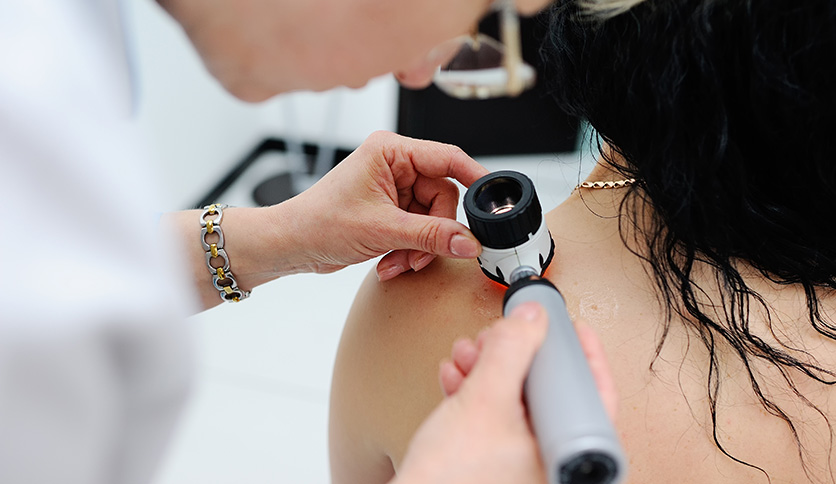
Doctors examining lesions to detect skin cancer should be trained in the use of a dermatoscope. A dermatoscope is a magnifying lens with a light source that allows detailed observation of skin lesions.
Ask your doctor any questions you may have. Your general practitioner can treat any areas of concern or may refer you to a specialist if necessary. Dermatologists specialise in skin diseases and can provide treatment. GPs and Dermatologists can excise skin cancers. However if more complicated surgery is required there can be a referral to a general surgeon or surgeon that specialised in cancer-related surgical techniques.
People with an increased risk of developing skin cancer include those with:
- fair skin, a tendency to burn rather than tan, freckles, light eye colour, light or red hair colour
- higher number of unusual moles (dysplastic naevi)
- weakened immune system (risk for squamous cell carcinoma (SCC) – a type of skin cancer)
- a history of melanoma in the immediate family
- previous personal experience of skin cancer2
Your doctor can discuss your level of risk with you. More frequent skin checks may be recommended for people identified to be at higher risk.
1. Cancer Council Australia. Check for signs of Skin cancer. Available at https://www.cancer.org.au/cancer-information/causes-and-prevention/sun-safety/check-for-signs-of-skin-cancer (Accessed 29 November 2024).
2. Cancer Council Australia. Detection and screening. Sydney: Cancer Council Australia, Updated 2020. Available at https://www.cancer.org.au/about-us/policy-and-advocacy/prevention/uv-radiation/related-resources/detection-and-screening (Accessed 29 November 2024).