Data and research
Collecting for today and to improve the care of tomorrow
The PRMs program has been designed to support people with cancer responding here and now, but it is also an important catalyst for driving meaningful advancements that will shape the future of cancer care in NSW.
As custodians of NSW cancer data, the Cancer Institute NSW will continue to lead the expansion of the PRMs program with the aim to embed personalised care across NSW cancer services. The more people we hear from through the PRMs program, the more comprehensive our understanding will become.
PRMs program reporting and achievements
See the ongoing progress of the PRMs program statewide implementation via the Cancer Institute NSW Performance Index.
- Find the first statewide report of the NSW cancer PRMs program.
How is the PRMs program informing research?
NSW PRMs data is available to approved researchers through the Enduring Cancer Data Linkage (CanDLe) program. This is ensuring that cancer research and the care it informs reflects the real experiences of people living with cancer.
Connecting medical records with what people with cancer report about their symptoms, treatment side effects and how cancer affects their daily life creates greater understanding of patient experience and disparities in care.
- Level of distress
- Practical problems (child care, housing, insurance/finance, transportation, work/school, treatment decisions)
- Family (dealing with children, partner, ability to have children, family health issues)
- Emotional problems (depression, fears, nervousness, sadness, worry, loss of interest in usual activities)
- Spiritual/religious or other concerns
- Physical problems (appearance, bathing/dressing, breathing, changes in urination, constipation, diarrhea, eating, fatigue, feeling swollen, fevers, getting around, indigestion, memory/concentration, mouth sores, nausea, nose dry/congested, pain, sexual, skin dry/itchy, sleep, substance abuse, or tingling in hands/feet).
- Pain
- Tiredness
- Nausea
- Depression
- Anxiety
- Drowsiness
- Appetite
- Feeling of wellbeing
- Shortness of breath
Additional data can also be collected via the survey application, depending on survey type and site configuration.
Data access and use
Authorised Cancer Institute NSW staff can access the data for support and maintenance of the system.
Healthcare providers can access survey response data within their Oncology Information System. The patient’s survey data is sent directly back in to the oncology information system where each cancer centre can extract it and develop their own analysis and follow their own approval processes.
Data framework
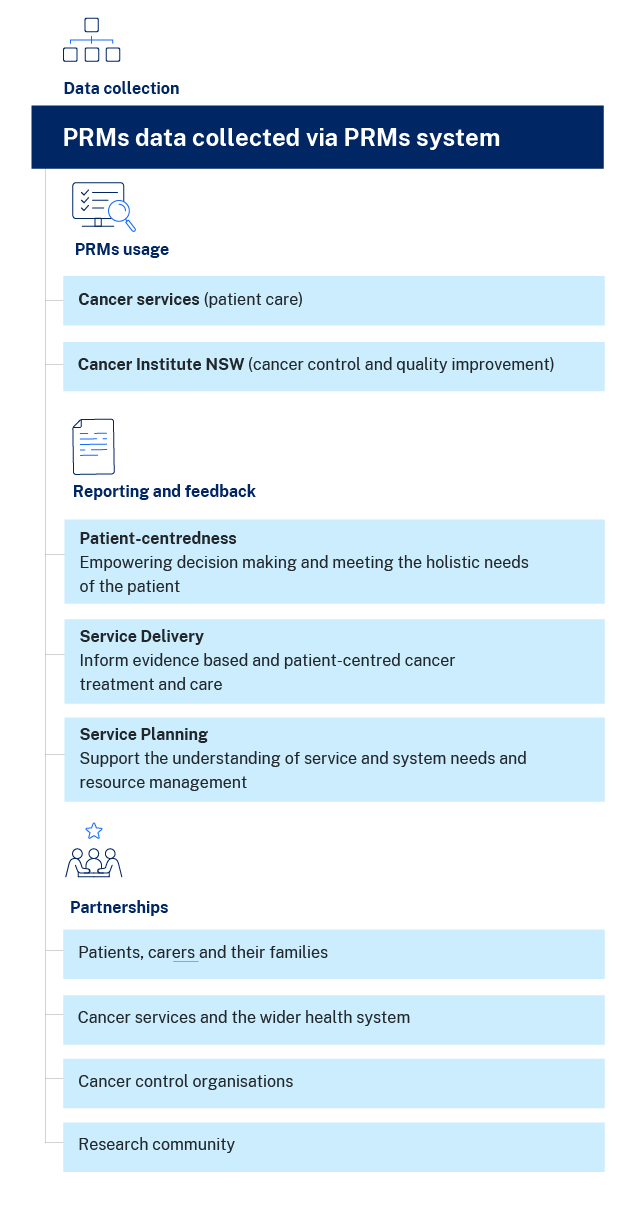
To date, the Institute has focused primarily on the development, implementation and uptake of the PRMs system into NSW cancer services. However as we approach completion of implementation, our focus will transition to using PRMs data for service delivery, service planning and quality improvement to understand the patients experience of their care.

If you would like more information on the Patient Reported Measures Program, please email us at cinsw-prms@health.nsw.gov.au.
