General cancer news
Jump to:
2025 general cancer news and updates
- November 2025
- Help improve cancer care and outcomes in NSW
- Enhanced NSW Cancer Plan Performance Index now live
- Aboriginal People in NSW snapshots 2025 - Reporting for Better Cancer Outcomes
- Supporting the safety of people exposed to hazardous drugs at work
- September 2025
- July 2025
- Using RBCO Data To Improve Cancer Care? Share Your Quality Improvement Case Study
- April 2025
- March 2025
- February 2025
- 2024 general cancer news and updates
- November 2024
- Reporting for Better Cancer Outcomes Primary Health Network Chief Executive meetings
- October 2024
- September 2024
- Reporting for Better Cancer Outcomes: Annual statewide report 2023 available online
- Celebrating excellence in cancer research and innovation in NSW
- NEW eLearning: Fertility preservation for people with cancer
- July 2024
- Just released – the NSW Cancer Plan Implementation Plan 2022-2023 Progress Snapshot!
- April 2024
- New multicultural health planning data for health professionals - March 2024
- The NSW Cancer Plan Implementation Plan (2024-2025) has launched!
- Closing the Gap is everyone's business - January 2024
- Free, evidence-based cancer eLearning resources for health professionals
- November 2024
- 2023 general cancer news and updates
- 2022 general cancer news and updates
November 2025 news and updates
Help improve cancer care and outcomes in NSW
The Cancer Institute NSW is developing the sixth NSW Cancer Plan. The Institute is working with many people to help create the plan. For example:
- Health workers
- Researchers
- People who have cancer
- People who have had cancer
- People looking after people with cancer
- Community groups
Have Your Say: go to https://www.haveyoursay.nsw.gov.au/nsw-cancer-plan
Closing date: 2nd November 2025
The NSW Cancer Plan sets the overall direction for the state’s cancer control efforts. It ensures that work is coordinated, collaborative and considers the needs of people impacted by cancer.
The Cancer Plan outlines key priorities and actions across the cancer continuum, from discovery, prevention and early detection, to care, survivorship and end-of-life.
The Cancer Institute NSW is collaborating with health services, communities, clinicians, policy makers, people impacted by cancer, researchers, and other key stakeholders to seek their valuable input and develop the Plan.
What you say matters. Use the Have Your Say website to share your ideas and help people with cancer.

Enhanced NSW Cancer Plan Performance Index now live
Monitoring and evaluation are vital to understand progress towards target outcomes of the NSW Cancer Plan (2022-2027) and to support continued improvements in cancer control across the state.
One of the tools used to track this progress is the NSW Cancer Plan Performance Index. This tool has high-level indicators that provide a snapshot of how the state is measuring against the Plan’s target outcomes:
- Achieve equitable cancer outcomes for all NSW residents
- Reduce the risk of preventable cancers for people in NSW
- Increase one and five-year survival of NSW residents with cancer
- Increase the collection and use of people’s reported experience and outcomes to improve care and services.
In the Performance Index’s recent update, indicators have been enhanced for the first time with interactive data to show trends over time. Information has also been added about activities that have contributed towards progress against these target outcomes.
Access the NSW Cancer Plan Performance Index on the Cancer Institute NSW website. Primary care professionals can use it to support project planning and initiatives.
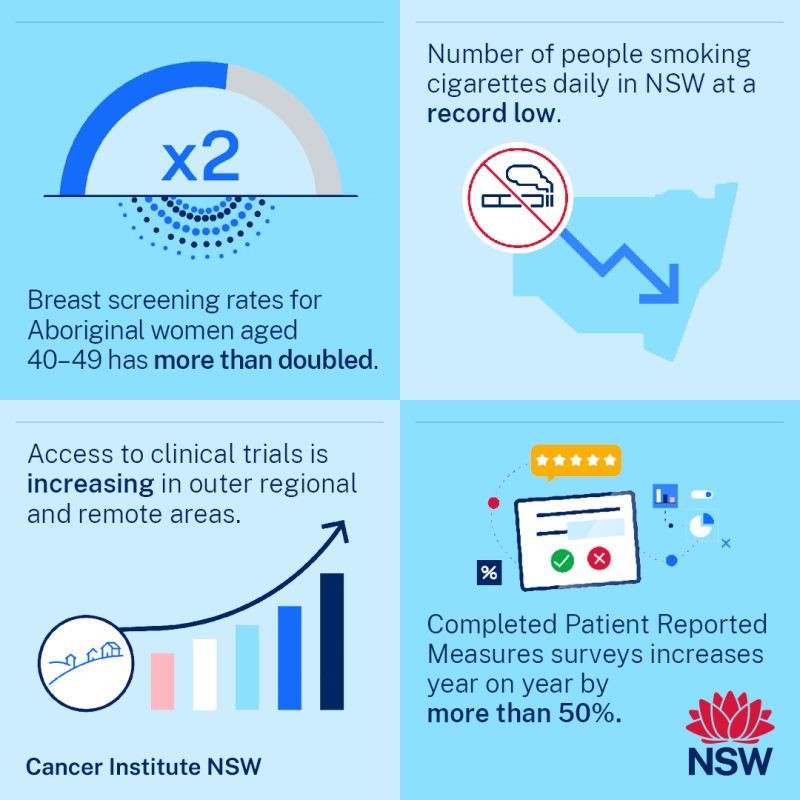
Aboriginal People in NSW snapshots 2025 - Reporting for Better Cancer Outcomes
A new statewide snapshot on the impact of cancer on Aboriginal people across NSW, highlights lung cancer (15%) and prostate cancer (11%) as the most common cancers for Aboriginal people in the state.
Complimenting the statewide snapshot, the Cancer Institute NSW has produced a series of regional snapshots under the Reporting for Better Cancer Outcomes program.
The snapshots explore common cancers, incidence and mortality, prevention and screening rates, 715 health assessments and other key indicators and are available by region:
- New South Wales (statewide)
- Aboriginal Health and Medical Research Council membership regions
- Local health districts
The snapshots are designed to inform local planning and quality improvement activities for health care provided to Aboriginal people. You can download the Aboriginal People in NSW snapshots 2025 at https://www.cancer.nsw.gov.au/about-cancer/document-library/aboriginal-rbco-snapshots.
For questions or feedback on the snapshots, please email CINSW-RBCO@health.nsw.gov.au

Supporting the safety of people exposed to hazardous drugs at work
The Cancer Institute NSW eviQ Education program has developed an eLearning course to support the safety of those working in a healthcare setting with exposure to anti-cancer drugs.
The Anti-cancer drugs outside of cancer setting (ADOCS) course is targeted to anyone from clinical staff administering anti-cancer drugs outside cancer units to receptionists or cleaners who do not deal directly with anticancer drugs but require the skills and knowledge to identify and understand how to safely handle them.
It is a free online blending learning course that focusses on safe handling, caring for patients receiving anticancer drugs, and administration.
Visit the course page for more information - https://education.eviq.org.au/courses/anti-cancer-drug-administration-course-adac/anticancer-drugs-outside-of-the-cancer-setting-ad
To find out about other courses for you, visit eviQ Education today - https://education.eviq.org.au/

September 2025 news and updates
The Cancer Institute NSW is proud to support Multicultural Health Week 2025, launching on 1 September at NSW Parliament House. This year’s theme, “Older people are the heart of the family and community”, highlights the importance of helping older people from culturally and linguistically diverse (CALD) backgrounds overcome barriers to accessing free cancer screening services and making healthy lifestyle choices. It’s a timely reminder of the role primary care plays in bridging the gap.
Why this matters for primary care:
- Around 36,000 people aged 60 and over are diagnosed with cancer each year in NSW - nearly three-quarters of all cases.
- 17% of people diagnosed with cancer speak a language other than English at home, and many may rely on you to help interpret information and guide next steps.
- More than a third of people aged 65+ in NSW were born overseas, meaning cultural and language considerations are part of everyday practice.
As health providers, you’re often the first point of contact for older CALD patients. Sharing prevention messages, encouraging participation in cancer screening, and prompting conversations about symptoms can make a big difference. Doctors play a vital role as a trusted voice in guiding decisions about screening and follow-up care.
Key campaign messages include:
- Stay physically active and eat well every day.
- Quit smoking - one of the most effective ways to reduce cancer risk.
- Age is the biggest risk factor for cancer, but finding cancer early saves lives.
- Know the symptoms, take part in screening and see your GP regularly.
For more information, visit Cancer information resources (multiple languages) | Cancer Institute NSW to access translated resources you can use in your practice.
July 2025 news and updates
Using RBCO Data To Improve Cancer Care? Share Your Quality Improvement Case Study

Have you or do you know someone who has used Reporting for Better Cance Outcomes (RBCO) data to make a positive impact in cancer care?
We’re looking for quality improvement case studies that highlight how the RBCO program is driving real-world improvements across the system.
By sharing your case study, you will:
• Highlight the great work happening in your service
• Contribute to statewide learning and collaboration
• Help demonstrate the value of the RBCO program in driving better care
Quality Improvement case studies may be published on the Cancer Institute NSW website.
If interested, please email CINSW-RBCO@health.nsw.gov.au.
April 2025 news and updates
eviQ is now on social media!
Improve your patient care by keeping pace with the rapidly evolving cancer landscape. eviQ on social media.
The two new social media platforms will support your practice with:
🎓Exclusive content – bite size learning on clinical topics, such as anticancer drug administration and oncological emergencies
🔔 Alerts – real-time updates on new clinical content and resources
🖥️ Webinars & events – easy registration for learning & professional development
The new @eviQ.cancer Instagram account is a microlearning platform, offering bite-sized, dynamic, regular and easy-to-digest clinical knowledge to support the safety and care of patients with cancer.
The eviQ Facebook page will deliver important clinical updates, easy registration to eviQ webinars, events and meetings as well as job and reviewer opportunities.
Follow @eviQ.cancer on Instagram and like eviQ on Facebook today.
March 2025 news and updates
New data shows top projected cancers in NSW for 2025

New data from the Cancer Institute NSW shows close to 54,000 people are projected to be diagnosed with cancer in NSW in 2025.
While NSW is recognised as a global leader in cancer care, cancer continues to have a significant impact on our community. Tragically, it is projected that more than 16,000 people will lose their lives to the disease by the end of 2025.
The five most common cancers diagnosed this year are projected to be:
-
prostate cancer
-
breast cancer
-
melanoma of the skin
-
bowel cancer
-
lung cancer.
The deadliest cancers in 2025 are projected to be:
-
lung cancer
-
bowel cancer
-
pancreatic cancer
-
prostate cancer
-
breast cancer.
Despite these sobering statistics, NSW has some of the world’s best cancer outcomes, with more than 70 per cent of people diagnosed with cancer still alive five years on.
While the figures are confronting, it’s a timely reminder that working together we can all make a difference and create a better, healthier future for people in NSW.
February 2024 news and updates
Promoting cancer screening, prevention and support this World Cancer Day
Tens of millions of people are diagnosed with cancer worldwide each year. World Cancer Day is an opportunity for people around the world to raise awareness about cancer, encourage its prevention and mobilise action to address the soaring global cancer burden.
While NSW is recognised as a global leader in cancer care, cancer continues to have a significant impact on our community with thousands of people hearing the words ‘you have cancer’ each year.
This year’s World Cancer Day theme ‘United by Unique’ encourages us to put people in the centre of their care, and their stories at the heart of the conversation.
It’s an opportunity to recognise and acknowledge the compassionate ways primary care professionals deliver person-centred cancer care that integrates patients’ unique needs every day.
World Cancer Day is also a timely reminder for you to speak with your patients about the ways they can reduce their cancer risk by:
- participating in cancer screening
- living a healthy lifestyle
- seeking help and support if they notice any changes to their health.
If you’d like more information on reducing cancer risk or cancer support to share with your patients, see our website.
November 2024 news and updates
Reporting for Better Cancer Outcomes Primary Health Network Chief Executive meetings
The Cancer Institute NSW conducts annual meetings with Primary Health Network Chief Executives and teams to engage with the sector and discuss the findings of the Reporting for Better Cancer Outcomes Primary Health Care reports. The reports contain actionable data and insights which are used to drive improvements in cancer outcomes and support meaningful change.
In September and early October, the Cancer Institute NSW held meetings with all NSW Primary Health Networks as part of the RBCO program. Positive and productive discussions were centred around addressing primary care cancer priorities such as screening and prevention. It was also great to hear about the great work and initiatives that primary health networks are undertaking in collaboration with primary care stakeholders across the cancer continuum.
The Cancer Institute NSW will continue to work with all primary health networks to reduce the impact of cancer and improve the outcomes and experiences of people affected by cancer across NSW.
Invitation to collaborate on NHMRC-Funded trial: Exciting Opportunity to Support Breast Cancer Survivors
Breast cancer survivors are at higher risks of heart disease and cancer recurrence. Having access to programs that support a healthy lifestyle (e.g. exercise, diet) between appointments can help.
Dr Anna Singleton (University of Sydney), Dr Carolyn Ee (GP; Western Sydney University) and team invite your practice to join the national EMPOWER-SMS-GP trial. The trial was co-designed with GPs, patient advocates, health professionals, and researchers and is funded by NHMRC and the World Cancer Research Fund.
This trial offers a unique opportunity to test if patients who receive a simple 6-month health program via text messages will improve health outcomes and if it’s useful for your practice. The trial requires minimal effort from your team (approx. 1 hour) - while also gaining CPD hours!
Interested?
OR
Contact:
-
Dr Anna Singleton- anna.singleton@sydney.edu.au
or
-
Trial manager, Dr Nashid Hafiz- nashid.hafiz@sydney.edu.au
Tackling disparities in multicultural communities

In 2024, it is expected that 8,234 new cases of prostate cancer will be diagnosed in males in NSW, accounting for 28.7% of all projected cancer diagnoses in males for the same year.1
The NSW Cancer Plan acknowledges that some multicultural communities have a higher incidence of cancer, higher prevalence of cancer-related risk factors, are less likely to use screening or cancer support services, and vary in their knowledge, awareness and beliefs about cancer.
The Cancer Institute NSW has developed a first of its kind report, A Snapshot of Linguistically Diverse People with Cancer in NSW, which provides an overview of most commonly spoken languages among people diagnosed with cancer in local health districts.
The report includes simple charts and key points, including demographic insights, on language groups with cancer. It can support organisations with health care planning, better allocation of resources for interpreting, considerations for cultural competence within healthcare settings, and can drive evidence-based decisions for local service delivery. It has the potential to support researchers to explore correlations between language proficiency and cancer outcomes and can inform future studies on health disparities and equity.
1.Cancer Institute NSW. Cancer Statistics NSW.www.cancer.nsw.gov.au/cancer-types-data-nsw[cited: 01/10/2024]
October 2024 news and updates
NSW Aboriginal Health Plan 2024 – 2034 has launched!

The vision of this plan is ‘Sharing power in system reform to achieve the highest levels of health and wellbeing for Aboriginal people’. By sharing decision-making power with Aboriginal people we can challenge the status quo, we can do things differently and we can achieve different outcomes.
Providing holistic, integrated and person-centred care is a key strategy of the Health Plan. To find out more, read the NSW Aboriginal Health Plan 2024-2034 and learn how you can make a difference.
The development of the statewide implementation plan and a monitoring and measurement framework will commence following the release of this plan, allowing sufficient time for stakeholders to consider opportunities for action.
September 2024 news and updates
Reporting for Better Cancer Outcomes: Annual statewide report 2023 available online
The eighth Reporting for Better Cancer Outcomes: Annual statewide report 2023 is now available online. The report highlights the current state of cancer control in NSW (including insights from the 10 Primary Health Networks) and some of the work being done to improve the experience and outcomes of people affected by cancer.
The Reporting for Better Cancer Outcomes (RBCO) program sees the Cancer Institute NSW working in partnership with cancer services to harness useable data and information to drive improvements in care. Access the report here.
This report is an overview of the 2023 Reporting for Better Cancer Outcomes reporting cycle that includes 15 local health districts (LHDs), 10 primary health networks (PHNs), one specialty health network and private hospitals across NSW. It provides results on key trends, achievements, challenges, and opportunities in cancer prevention, screening, treatment and service delivery, and clinical trials.
Celebrating excellence in cancer research and innovation in NSW
We are excited to announce the return of the NSW Premier’s Awards for Outstanding Cancer Research, a prestigious event which honours the excellence and breakthroughs in cancer research and innovation. Nominations are now open and close at 12pm on Monday, 19 August 2024. Anyone involved in improving cancer patient outcomes within NSW is eligible to be nominated.
The Cancer Institute NSW is delighted to announce the return of the NSW Premier’s Awards for Outstanding Cancer Research, a prestigious event that pays tribute to the remarkable accomplishments of individuals and teams within the cancer research community and those supporting innovation and cutting-edge delivery of care.
This annual event is a vibrant celebration of excellence and breakthroughs in cancer research and innovation. It honours outstanding achievements spanning academic research, advancements in cancer clinical outcomes, and the successful integration of innovation into top-tier care for the people of NSW.
Nominations are now open and close at 12pm on Monday, 26 August 2024. Anyone involved in improving cancer patient outcomes within NSW is eligible to be nominated.
There are eight award categories open for nominations, each highlighting progress and success in line with the strategic goals of the NSW Cancer Plan.
Winners will be announced at the NSW Premier’s Awards for Outstanding Cancer Research event to be held at 5.30pm, Thursday, 21 November 2024 at NSW Parliament House.
Full eligibility guidelines and nomination forms are now available. If you have any questions about the nomination process, please contact the Cancer Institute NSW Grants team at cinsw-grants@health.nsw.gov.au
NEW eLearning: Fertility preservation for people with cancer
A new 5-minute rapid learning module on fertility preservation for people with cancer has been released on the eviQ Education platform. Head to the eviQ Education website now to access the new module and explore a wealth of additional resources and education tailored for cancer care professionals.
The Cancer Institute NSW eviQ Education program has released a new rapid learning module on fertility preservation for people with cancer.
Developed with clinical experts, the mini-module educates cancer health professionals on the impact of cancer treatment on fertility and fertility preservation options for people with cancer. It highlights recommendations from the Clinical Oncology Society of Australia (COSA) guidelines.
The five-minute eLearning includes three cases studies, and will support health professionals to be able to:
- outline the impact of cancer treatment on fertility
- identify fertility preservation options
- describe their role in fertility preservation care.
July 2024 news and updates
Just released – the NSW Cancer Plan Implementation Plan 2022-2023 Progress Snapshot!
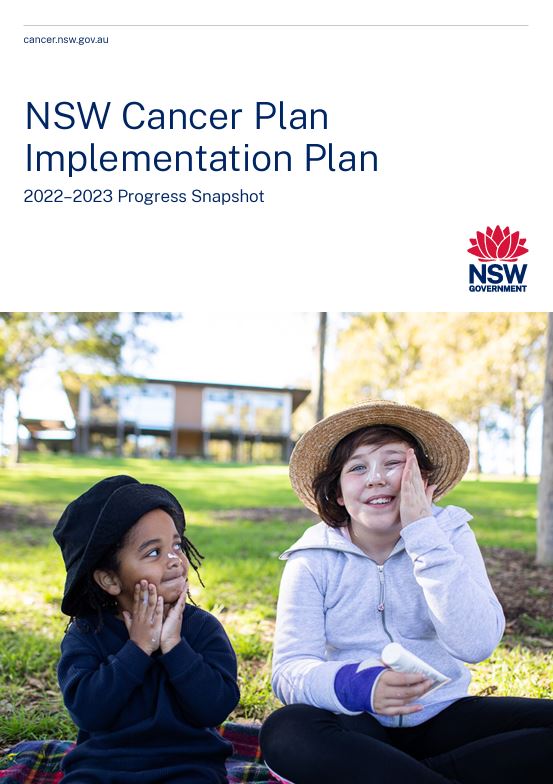
The NSW Cancer Plan Implementation Plan 2022-2023 Progress Snapshot captures the incredible collective achievements and progress across NSW to address the four priorities of the NSW Cancer Plan. This acknowledges the important role of primary healthcare professionals in delivering services, providing exceptional care, and lessening the overall impact of cancer.
Cancer remains one of our greatest health challenges, but thanks to collaboration and partnerships across our state, we have made some great progress.
From the more than 24,400 calls to Quitline for smoking and vaping cessation support, to the record-breaking 635,000 people who were screened with BreastScreen NSW in 2022/23, the new Progress Snapshot is filled with impactful data, real perspectives and stories of success.
Primary healthcare professionals and other partners play an integral role in engaging focus populations and tailoring the delivery of cancer prevention, treatment and support services to meet the needs of local communities.
To view the incredible collective achievements made between 2022 and 2023, please view the Progress Snapshot.
Cancer statistics at your fingertips!
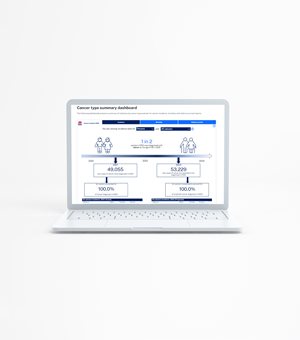
Data and insights across 29 cancer types, clinical trials, BreastScreen participation and the most common cancers among Aboriginal people in NSW is available in a user-friendly format. Specific cancer data can also be broken down to local health district and local government area levels.
The dashboards utilise the Institute’s centralised reporting indicators database. Data are updated regularly as more information is reported into the NSW Cancer Registry (NSWCR) and other sources.
April 2024 news and updates
New multicultural health planning data for health professionals
Cancer Institute NSW recently launched a new interactive digital dashboard to provide accessible statewide data on NSW’s multicultural communities. Healthcare professionals, including those working in primary care, are encouraged to explore the tool when planning activities to help improve health outcomes for NSW’s culturally and linguistically diverse communities.
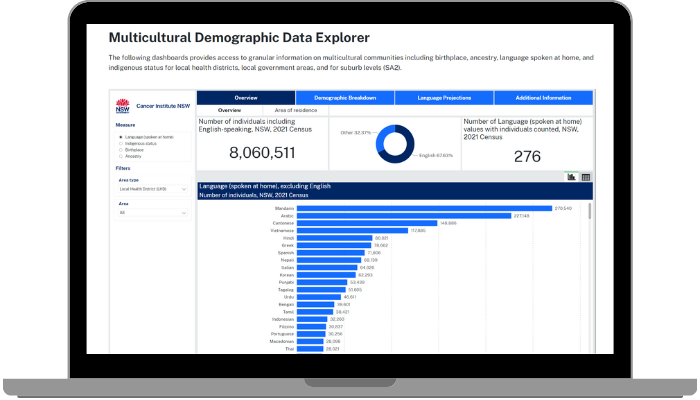
Using 2022 Census data, the dashboard provides a clear picture of peoples’ birthplace, ancestry, language spoken at home, and indigenous status.
This is broken down to local health district, local government and suburb levels. It also includes detailed narratives embedded in the dashboard.
People working in healthcare and beyond are encouraged to explore the tool when planning activities to help improve health outcomes for NSW’s culturally and linguistically diverse communities.
You can also find additional information in our easy-to-use, reports contain detailed narratives of ABS census 2021 data on multicultural communities, which presents health services with an exciting opportunity to be more responsive to their multicultural patients/clients and enhance their equity focus.
Multicultural demographics data explorer reports:
- Report 1. Birthplace commentary and analysis: Top countries of birth in NSW
- Report 2. Language commentary and analysis: Top languages used at home in NSW
- Report 3. NSW local health districts: Top 10 birthplace and language groups other than English
- Report 4. NSW multicultural population summary profile
- Guidance and notes on multicultural source data.
Further resources:
Please share these valuable and time-saving resources with your networks.
January 2024 news and updates
The NSW Cancer Plan Implementation Plan (2024-2025) has launched!
The new NSW Cancer Plan Implementation Plan (2024-2025) acknowledges the importance of primary healthcare professionals in delivering services and contributing to the planning and implementation of some activities. Stay informed and take action by reviewing the new Implementation Plan.

In collaboration with multiple stakeholders, including Primary Care, the Cancer Institute NSW has developed the NSW Cancer Plan Implementation Plan 2024-2025 (the second Implementation Plan).
The collaborative efforts have played a pivotal role in shaping the Implementation Plan, which acknowledges the importance primary healthcare professionals have in both the delivery of services and contributing to planning for and implementation of some activities.
This statewide Implementation Plan builds on the NSW Cancer Plan Implementation Plan 2022-2023 (the Foundational Implementation Plan) and details how we will collectively achieve the goals of the NSW Cancer Plan: A plan for NSW to lessen the impact of cancer 2022–2027.
Please download and review the second Implementation Plan and share it with your teams and networks. Discuss and explore with your teams, your role in the delivery of relevant services and activities.
Closing the Gap is everyone's business
National Close the Gap Day this year is on the 21st of March. Closing the gap is a formal commitment developed in response to achieve Aboriginal health equality within 25 years. Primary care providers can support this commitment by encouraging uptake of the Health Assessment for Aboriginal and Torres Strait Islander People – MBS item 715.
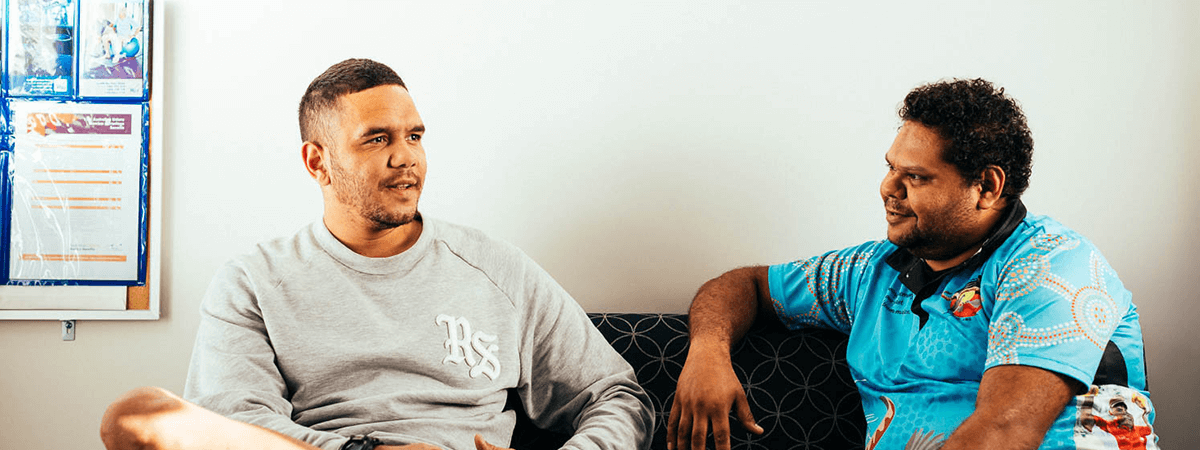
Closing the gap is a formal commitment developed in response to achieve Aboriginal health equality within 25 years. Key elements of the campaign include developing partnerships with Indigenous peoples and their representatives, providing support for Aboriginal Community Controlled Health Services, improving mainstream services to make them more responsive, and using a targeted approach to achieve Indigenous health equality by addressing a range of health conditions and health determinants.
To support this campaign, primary care providers can promote and encourage uptake of the Health Assessment for Aboriginal and Torres Strait Islander People – MBS item 715. The Cancer Institute is also working in partnership with AH&MRC to support Primary Care Pathways for Aboriginal communities.
The 715 is a comprehensive, annual health check for Aboriginal and Torres Strait Islander peoples which help identify a risk of illnesses or chronic conditions, like cancer. In NSW, rates of 715 completion are low, with the rate of completion in 21/22 being 23.5%, down from 27% in 20/21.1 This downward trend has been seen nationally. From a cancer control perspective, the completion of 715s is crucial as it facilitates Aboriginal and Torres Strait Islander people’s access to prevention, cancer screening, and referral to cancer services within a primary health care setting.
See below for further resources on the 715 and cancer control activities relating to Aboriginal and Torres Strait Islander peoples:
- MBS item 715
- RACGP - Resources to support health checks for Aboriginal and Torres Strait Islander people
- Cancer Primary Care - AH&MRC (ahmrc.org.au)
- Closing the Gap Implementation Plans
1. AIHW analysis of Medicare Benefits Schedule (MBS) data; populations based on Australian Bureau of Statistics (ABS) data. https://www.aihw.gov.au/reports/indigenous-australians/indigenous-health-checks-follow-ups/contents/health-checks/state-and-territory-comparisons (accessed 14/02/2024)
January 2024 news and updates
Free, evidence-based cancer eLearning resources for health professionals
International Day of Education is celebrated on the 24th of January each year advocating for improved access to education for everyone. eviQ Education is a program under the Cancer Institute NSW that provides medical, nursing and allied health with free online learning resources.
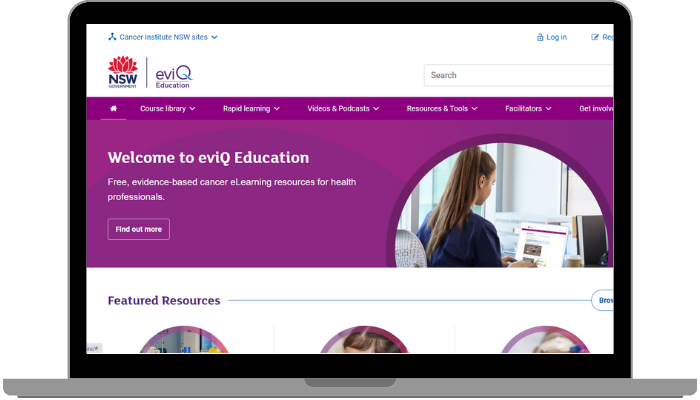
eviQ Education is a program under the Cancer Institute NSW that provides medical, nursing and allied health with free online learning resources.
All resources aim to standardise and promote evidence based best practice when caring for patients with a cancer diagnosis and are available in a range of different formats such as:
- Rapid learning (eLearning modules that can be completed in 2 – 7 minutes on the go)
- Mobile app quizzes
- Podcasts
- Webinars; and
- Courses
For more information visit eviQ Education. Or, email cinsw-eviqed@health.nsw.gov.au.
2023 general cancer news
2023 general cancer news
Cancer Institute NSW’s multicultural e-newsletter
Stay informed and take action by exploring the Cancer Institute NSW Multicultural Program’s e-newsletter, offering valuable updates on cancer-related developments for multicultural communities.
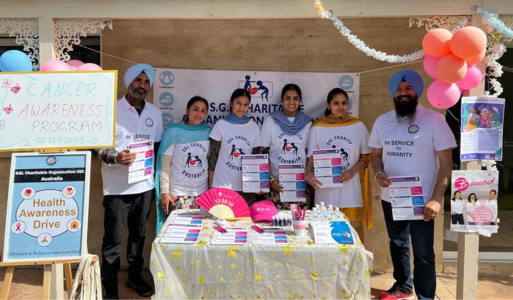
Check out the Cancer Institute NSW’s Multicultural Program e-news, a quarterly update covering the latest news on cancer prevention, screening, care and treatment, and research relevant to multicultural communities in NSW.
You can find our October edition here and past editions here. If you would like to sign up to the mailing list please email the multicultural team at CINSW-Multicultural@health.nsw.gov.au. We also encourage you to share the e-newsletter with interested stakeholders.
Get in touch if there’s something you’d like to see in the e-newsletter, or if you have feedback.
Supporting GPs with cancer specialist referrals
Cancer Institute NSW’s Canrefer website provides an up-to-date directory of cancer specialists, services, and multidisciplinary team (MDTs) across NSW and ACT to support the referral of patients with a confirmed or suspected cancer.

Most cancers are diagnosed in primary care when patients present with symptoms that raise the suspicion of cancer. Timely and appropriate investigation and referral of these patients is an important part of optimising outcomes.
To support GPs in the referral of patients with a confirmed or suspected cancer, the Institute’s Canrefer website provides an up-to-date directory of cancer specialists, services, and multidisciplinary team (MDTs) across NSW and ACT.
Searching by cancer type and suburb provides listings of relevant specialists and cancer services ranked by distance from that location.
Multidisciplinary cancer care is central to achieving good cancer outcomes, and the Institute recommends that all cancer patients have their care overseen by an appropriate MDT. To facilitate this, all specialists listed on Canrefer are active MDT members.
Additional information includes whether hospitals are identified as specialist or high-volume centres for particular cancer types, have active clinical trials or collect patient-reported measures, and whether specialists speak any languages in addition to English.
Free education module for GPs: Assessing and managing liver disease in primary care
Liver disease now affects up to 3 of every 10 Australian adults. This education activity provides an overview of liver disease and addresses how GPs can assess and manage this condition in primary care.
On completion of this education activity participants will be able to:

- Assess the prevalence and aetiology of liver disease in the Australian context.
- Identify the common types of liver disease and their potential consequences.
- Evaluate liver disease through the identification of abnormal liver biochemistry.
- Apply guideline recommendations to identify patients for urgent referral.
This education module equates to two hours of CPD activity.
To complete this free education module, click here.
Alternatively, you can complete this topic as part of a larger advanced course, called "The rising health threat of liver disease: What GPs can do to prevent premature mortality". Click here to access the advanced course.
NSW Health launches guidance to support young people to quit vaping
NSW Health has released a new guide to support health professionals and others who work with young people to assist young people to quit e-cigarettes (vapes).
The NSW Health: Guide to support young people to quit e-cigarettes has been developed with the advice of clinical experts in youth addiction, youth drug and alcohol, youth mental health, pharmacy, general practice, and smoking cessation.
The Guide is intended to support all health professionals and others who work with young people to effectively address e-cigarette use, support young people to manage nicotine withdrawals, and assist young people in quitting e-cigarettes. It complements existing resources available in the NSW Health Vaping Toolkit, as well as upcoming resources under development.
The Guide takes a pragmatic approach to supporting young people to quit vaping and includes content on Ask, Advise, Help brief interventions, screening tools, a ‘toolbox’ of behavioural support options, pharmacotherapy where appropriate and links to other useful resources. Content will be regularly reviewed and updated as new evidence and consensus emerges on how to best support young people to quit.
Please share the Guide with your networks, and if you have any feedback, please provide this via email to email MOH-Tobacco@health.nsw.gov.au.
Resources to support health service planning and service delivery for multicultural communities

Cancer Institute NSW has recently developed and launched a suite of informative, easy-to-use, health service planning and service delivery resources. The suite’s four reports contain detailed analyses of ABS census 2021 data, which presents health services with an exciting opportunity to be more responsive to their multicultural patients/clients and enhance their equity focus.
Multicultural demographics data explorer reports:
- Report 1. Birthplace commentary and analysis: Top countries of birth in NSW (PDF)
- Report 2. Language commentary and analysis: Top languages used at home in NSW (PDF)
- Report 3. NSW local health districts: Top 10 birthplace and language groups other than English (PDF)
- Report 4. NSW multicultural population summary profile (PDF)
Guidance and notes on multicultural source data
Additionally, these reports will also save your service time when writing briefs, reports, documents, and service planning.
Please share these valuable and time-saving resources with your networks.
Webinar on equitable focus to access to treatment and clinical trials

Cancer Conversations is an after-hours online forum for health professionals, featuring topics of interest related to cancer treatment and care.
This webinar was held in June and focused on equitable access to treatment and clinical trials.
Facilitator, Professor Sanchia Aranda, Dr Abhijit Pal, Dr Robert Zielinski and guest speakers discussed the enablers and challenges to clinical trials.
Joining Dr Pal and Dr Zielinski on the panel to share their knowledge and perspectives were:
- Marg McJannet, Chief Executive for ANZUP
- Megan Collett, Head of Development Operations for APAC
- Mayra Ouriques, Clinical trials optimisation manager for Strategic Research Investment with the Cancer Institute NSW.
View the recording of this conversation >
The Cancer Conversation webinars for Advanced Care Planning and Voluntary Assisted Dying will be held later in the year.
Information to support your patients affected by cancer

Patient information on the Cancer Institute NSW website includes information on key topics around diagnosis, treatment, coping with cancer and finding support, with links to additional resources from reputable organisations.
There is currently information on 34 specific cancer types.
In addition, the Institute have been increasing the in-language content to support people from multicultural communities affected by cancer.
This now consists of information in 8 languages (Arabic, Simplified and Traditional Chinese, Greek, Italian, Korean, Spanish and Vietnamese), covering the same core topics as our English content.
Free webinar: Equitable focus on access to treatment and clinical trials

Cancer Conversations is an after-hours online forum for health professionals, featuring topics of interest related to cancer treatment and care.
The next Cancer Conversations webinar focuses on equitable access to treatment and clinical trials.
Facilitator, Professor Sanchia Aranda, Dr Abhijit Pal, Dr Robert Zielinski and guest speakers discuss the enablers and challenges to clinical trials.
Joining Dr Pal and Dr Zielinski on the panel to share their knowledge and perspectives are:
- Marg McJannet, Chief Executive for ANZUP
- Megan Collett, Head of Development Operations for APAC
- Mayra Ouriques, Clinical trials optimisation manager for Strategic Research Investment with the Cancer Institute NSW.
NAIDOC Week and 715 Indigenous Health Check for Aboriginal patients

National NAIDOC Week celebrations will be held from 2-9 July 2023. This year’s theme is For Our Elders, which recognises the important role of Elders and their prominent place in Aboriginal communities and families to share cultural knowledge, nurturing ways, advocacy and teachings.
NAIDOC Week is a great opportunity to provide 715 Indigenous Health Checks to any Aboriginal and Torres Strait Islander patients who attend your practice.
The 715 Indigenous Health Check offers support for preventive healthcare and improves a patient’s health, including physical, psychological and social functions.
The 715 Indigenous Health Check must include the following elements:
(a) Information collection, including taking a patient history and undertaking examinations and investigations as required.
(b) Making an overall assessment of the patient.
(c) Recommending appropriate interventions.
(d) Providing advice and information to the patient.
(e) Keeping a record of the health assessment, and offering the patient, and/or patient's carer, a written report about the health assessment with recommendations about matters covered by the health assessment.
(f) Offering the patient's carer (if any, and if the general practitioner considers it appropriate and the patient agrees) a copy of the report or extracts of the report relevant to the carer.
If, after receiving this health assessment, a patient who is aged between 15 to 55 is identified as having a high risk of developing type 2 diabetes, as determined by the Australian Type 2 Diabetes Risk Assessment Tool, the general practitioner may refer that person to a subsidised lifestyle modification program, along with other possible strategies to improve the health status of the patient.
Multilingual resources on cancer prevention, detection, treatment and support

From encouraging cancer screening to supporting people living with cancer, the Cancer Institute NSW has resources to help you support clients who prefer a language other than English.
Multicultural communities are likely to have a higher incidence of cancer, prevalence of smoking, and poorer outcomes during and after cancer treatment.1 According to RACGP, helping patients “access resources that are culturally appropriate, translated, and/or in plain English” is a core standard for practitioners.2
View the Cancer Multilingual Resource Directory to see the in-language resources available. The resources include videos, factsheets, flipcharts and webpages in 39 languages on healthy living, clinical trials, cancer screening, and cancer patient information.
For more information:
- Cancer Multilingual Resource Directory, Cancer Institute NSW (PDF)
- Cancer in multicultural communities
References:
1. https://www.cancer.nsw.gov.au/about-cancer/document-library/nsw-cancer-plan-2016-2021/focus-multicultural-communities#:~:text=The%20NSW%20Cancer%20Plan%20aims,linguistically%20diverse%20(CALD))%20communities.
2. https://www.racgp.org.au/running-a-practice/practice-standards/standards-5th-edition/standards-for-general-practices-5th-ed/core-standards/core-standard-1/criterion-c1-4-interpreter-and-other-communication#ref-num-4
Close the Care Gap: World Cancer Day 2023
Saturday, 4 February marks World Cancer Day 2023, and the Cancer Institute NSW (the Institute) is joining the global effort around this year’s theme 'Close the Care Gap'. It is a reminder that cancer doesn’t impact everyone equally.

Within NSW, some people continue to be disproportionately affected by cancer including:
- Aboriginal people
- Multicultural communities
- Sexuality and gender diverse people
- Regional, rural and remote communities
The Institute is committed to equity of outcomes, person-centredness and collaboration with these three overriding principles guiding the direction of the NSW Cancer Plan 2022-2027 (PDF). Find further information on initiatives from the Institute which aim to close the care gap among Aboriginal people, multicultural communities and sexuality and gender diverse people.
Primary health care plays a vital role in closing the care gap and supporting equity of outcomes through prevention, screening and early detection of cancers, timely referral and assisting with the coordination of care.
The Primary Care Cancer Control Quality Improvement toolkit aims to support ways that cancer screening and prevention activities can be built into your practice or health service. Each module will guide you through the steps required to:
• Promote a patient-centred approach to increase participation in the national cancer screening programs and reduce risky lifestyle behaviours through preventative programs.
• Guide a team-based approach to quality improvement, utilising data and systems to increase participation in the national cancer screening programs and preventative programs to reduce cancer risk.
Stay up to date with the latest news and information to support primary care across the cancer continuum on our dedicated Primary care updates webpage.
Biennial screening mammography recommended for Aboriginal and Torres Strait Islander women aged 40–74 years


BreastScreen NSW aims to reduce morbidity and mortality from breast cancer through early detection.
BreastScreen NSW is delivering a pilot, PUTUWA: The BreastScreen NSW Aboriginal women age project, and is now recommending that Aboriginal and Torres Strait Islander women screen every two years from age 40–74.
Breast cancer is the most diagnosed cancer in Aboriginal women and the second most common cause of death. Aboriginal women are less likely to participate in routine breast screening than non-Aboriginal women and are diagnosed with invasive breast cancer at a higher rate than the overall NSW female population.
The project aims to increase participation of Aboriginal and Torres Strait Islander women in routine breast screening. A key element is communications targeting Aboriginal women aged 40–74 in NSW, the Aboriginal health workforce and GPs.
Your assistance to share this information with relevant networks is appreciated.
Note that the recommended screening age for non-Aboriginal women remains 50–74 years.
Thank you for your ongoing support of BreastScreen NSW. Please contact your local BreastScreen NSW service on 13 20 50 for more information.
2022 general cancer news
2022 general cancer news
The Cancer Institute NSW is committed to improving cancer outcomes for Aboriginal and Torres Strait Islander people

The Cancer Institute NSW (the Institute) is focused on ongoing and innovative development of cancer control projects and has prioritised Aboriginal people in the NSW Cancer Plan 2022–2027.
Learn more below about our initiatives and what we are doing. For more information, contact cinsw-primarycare@health.nsw.gov.au.
Primary Care
The NSW Aboriginal Cancer Primary Care Pathways Program will be delivered over four years by the Institute in partnership with the AH&MRC. The program will establish 15 Aboriginal cancer care pathways positions in primary health to promote 715 health checks and support people to navigate the primary care cancer pathway.
BreastScreen NSW PUTUWA project
The PUTUWA project supports evidence that earlier engagement in BreastScreen NSW for Aboriginal women aged 40–49 is beneficial. A screening pilot will broaden the recommended BreastScreen NSW screening age range for Aboriginal women to 40–74 years old (currently 50–74 years) to increase biennial participation. Further updates to follow in 2023.
Bowel cancer screening
A National Alternative Pathway trial to the National Bowel Cancer Screening Program (NBCSP) demonstrated efficacy and appropriateness to increase participation among Aboriginal and Torres Strait Islander people to access bowel cancer screening. The NBCSP has recently commenced rollout of the alternative access pathway enabling selected Primary Health Care Services to order and issue bowel screening kits to patients, with Aboriginal Community Controlled Health Services and Aboriginal Medical Services.
Access the alternative access to bowel screening kits guide >
Training for Aboriginal Health Workers to promote cervical screening
The Institute has appointed Family Planning NSW to train and educate up to 50 Aboriginal health workers/practitioners across local health districts to actively promote cervical screening to all Aboriginal women and people with a cervix. This will include the new self-collection option, which will help overcome the many barriers that Aboriginal women have identified.
New online cervical screening practical resource for the health workforce that work and support Aboriginal women
The Institute’s NSW Aboriginal Cervical Screening Network are developing a culturally responsive and practical resource to support the recruitment of Aboriginal women into regular cervical screening. The How to Increase Cervical Screening in Your Local Area Guide includes checklists for the health workforce in particular those working and supporting Aboriginal women to implement community-based activities, such as pop-up cervical screening clinics and yarning circles. There will be further updates to follow in 2023.
Aboriginal Quitline
Aboriginal Quitline provides telephone-based smoking cessation counselling and advice from Aboriginal counsellors. An Aboriginal Quitline Coordinator leads the development and implementation of a community engagement strategy, and written resources (Quit Kits), tailored for Aboriginal communities, are available online or by request through Quitline.
Quitline number: 13 78 48.
Learn more about Aboriginal Quitline >
Partnership to support smoking cessation with nicotine replacement therapy (NRT)
The Aboriginal Health and Medical Research Council (AH&MRC) has received funding from the Institute to support participating services to purchase NRT. The funding is also for smoking cessation interventions training, to share learnings to a tobacco interest group of member services, and for collating and disseminating resources.
Hospital-based cancer services: improving access and care for Aboriginal people with cancer
The Institute is supporting many new initiatives to support Aboriginal people with cancer, their families and communities to access cancer treatment services that are more culturally appropriate and support the whole of self to be well.
The Institute has launched a Coordination of Care for Aboriginal People with Cancer Project
Funding has been provided for Aboriginal health staff to support people with a cancer diagnosis to navigate services and improve cultural safety of cancer services. The project is currently being piloted in four NSW local health districts.
Culturally appropriate wellbeing measurement
What Matters 2 Adults (WM2A) is the first nationally relevant measure of wellbeing developed specifically by and for Aboriginal and Torres Strait Islander adults. The Institute has partnered with the WM2A research team in Sydney University and Queensland University on the WM2A Implementation (WM2A-I) Research Project, which is working with a number of NSW local health districts to determine the most effective implementation strategy for the WM2A measure into routine care. The WM2A can be collected electronically, and the information will be used at point of care with patients to support care and referrals, and the many dimensions of a person’s wellness and health.
The NEW Primary Care Cancer Control Quality Improvement Toolkit

The Cancer Institute NSW has created an online easy-to-follow Primary Care Cancer Control Quality Improvement Toolkit for improving cancer screening rates and cancer prevention activities in your practice or health service.
The toolkit contains quality improvement modules focused on cancer screening and cancer prevention.
Each module will guide you through the steps required to:
- Promote a patient centred approach to increase participation in national cancer screening programs and reduce risky lifestyle behaviours through preventative programs.
- Guide a team-based approach to quality improvement, utilising data and systems to increase participation in national cancer screening programs and preventative programs to reduce cancer risk.
A range of practical resources are available to download, including quick reference guides for each module and templates for quality improvement planning and implementation in your practice.
Get access to the toolkit and resources >
For more information:
Contact Tracey Wills Vashishtha at cinsw-primarycare@health.nsw.gov.au.
Non-small cell lung cancer incidence for Lung Cancer Awareness Month

Lung Cancer Awareness Month is observed annually in November and highlights the need for more research to be conducted to better understand the disease.
The Cancer Institute NSW has led a study population-based linkage study on country of birth and non-small cell lung cancer incidence, treatment, and outcomes in New South Wales, Australia.
People with a cancer diagnosis living in regional communities are at risk of not getting the treatment they require, due to the potentially prohibitive financial costs of travelling and being away from home
Country of birth (COB) was categorised as Australia, China (excluding Hong Kong, Macau, and Taiwan), Germany, Greece, Italy, Lebanon, New Zealand, the Philippines, United Kingdom, and Vietnam. The sociodemographic characteristics of incidence and outcomes observed in this NSW study of non-small cell lung cancer (NSCLC) align with changing migration patterns, including the higher percentages of older and male cases from European countries in the earlier periods and higher percentages of younger cases from Southeast Asia, New Zealand, and the Middle East in more recent years.
View further findings relevent to primary care >
Symptoms of lung cancer
It is important to know the symptoms of lung cancer. Although lung cancer occurs mostly in people aged 60 and over, it can affect people of any age including those who have never smoked.
What are the symptoms?
- coughing up blood
- a new or changed cough that does not go away
- chest pain and/or shoulder pain or discomfort – the pain may be worse with coughing or deep breathing
- trouble breathing or shortness of breath
- hoarse voice
- weight loss
- loss of appetite
- chest infection that does not go away
- tiredness or weakness.
For health professional and community resources, please visit Cancer Australia.
Increased financial assistance for regional and rural communities - IPTAAS enhancement

IPTAAS - the Isolated Patients Travel and Accommodation Assistance Scheme - is a very important program to support cancer patients during their cancer treatment. This NSW Government scheme provides financial assistance towards travel and accommodation costs when a patient needs to travel long distances for treatment that is not available locally.
People with a cancer diagnosis living in regional communities are at risk of not getting the treatment they require, due to the potentially prohibitive financial costs of travelling and being away from home.
Since 1 August 2022, there is now new financial assistance rates and expanded eligibility.
Accommodation assistance will be paid at a rate of:
- $40 per night if you are staying with family or friends (Airbnb will be paid at this rate)
- $75 per night if you are staying in not-for-profit or commercial accommodation for the first seven nights and $120 per night from day eight onwards.
The private vehicle subsidy rate increases to 40c per kilometre.
Financial assistance remains the same for:
- the full cost (including booking fees) of public transport is reimbursed less the GST
- the full economy cost less GST is reimbursed for approved air trave
- taxi subsidy that is based on length of appointments/treatment.
Patients attending high-risk foot clinics, non-commercial clinical trials, highly specialised publicly funded oral health clinics in NSW and ocularists are now also eligible to claim.
Learn more about increased financial assistance and eligibility.
In focus: Cancer survivorship and Primary Care

The number of people living with or beyond cancer (defined as ‘cancer survivors’) is increasing, with the most prevalent groups having a history of prostate, breast, melanoma or colorectal cancer.
Primary care plays an important role in the ongoing management of cancer survivors.1
Survivorship care involves management of comorbid illness, symptom management, psychosocial care, secondary prevention, health promotion and overall care coordination.2
Communication and collaboration between GPs and other primary care providers and specialist cancer services is critical to support patients and healthcare providers in delivery of care.
Excellent communication between the GP and oncology teams is paramount to achieve optimal cancer treatment and outcomes, and holistic evidence-based care.
Primary health care’s involvement in case management and shared care and team care arrangements are important elements of their role in managing cancer as a chronic condition, with Australian Optimal Care Pathways recommending, for many cancer types, shared models of care for cancer survivors.3
Cancer Institute NSW has developed education modules to assist clinicians in the delivery of survivorship care.
Helpful resources:
For more information, contact Kath Duggan, Primary Care Strategic Advisor at cinsw-primarycare@health.nsw.gov.au.
2022 Multicultural Health Week

Multicultural Health Week (MHW) will be held 5-11 September 2022 and is an opportunity to raise awareness of health issues experienced by culturally and linguistically diverse communities.
Here are some facts:
- Women from CALD communities have lower participation rates in BreastScreen NSW than the general population.4
- In 2020-21, 43% of eligible women in NSW were screened for breast cancer. This figure is 8 percentage points lower for CALD women.5
- Australians who spoke a language other than English at home had a lower bowel screening participation rate than those who spoke English at 25-34% compared to 45-49%, respectively.6
MHW is themed every year and this year’s theme is ‘Cancer Screening’, with a focus on the three National Cancer Screening Programs. Radio advertisements in 19 languages and video advertisements in 6 languages will be run on community radio and on-demand video channels.
GPs play a significant role in improving screening rates in CALD communities as they are seen as trusted sources of health information by community members, especially newly arrived refugee communities.
This campaign is asking people from diverse cultural and language groups to speak to their GPs to understand their eligibility and how they can undertake cancer screening tests.
The three national cancer screening programs are: breast cancer screening, bowel cancer screening and cervical cancer screening.
Cancer Institute NSW has produced factsheets in 38 languages with key messages on the national cancer screening programs. They are downloadable as factsheets or as audio files (in 8 languages) and are available on our website.
-
Find out more about the three national cancer screening programs.
-
Get access to patient information in other languages.
-
Complete the course in effective cultural communication in oncology.
For more information, please contact Sheetal Challam (sheetal.challam@health.nsw.gov.au).
Prostate Cancer Awareness month—focus on the Prostate Clinical Cancer Register
Prostate cancer is now the most common cancer in Australia—overtaking breast cancer.7
Here are some facts:

- 1 in 6 Australian men will be diagnosed in their lifetime.8
- 75% of Australians still don’t know the PSA test guidelines.7
- Only 36% of prostate cancers are detected at the earliest stage, when we know we can effectively treat the disease.9
- In Australia 5-year survival for men treated for prostate cancer is over 95%.10
The actions we take as a health care community can help ensure best treatment and care, and long-term survival.
The NSW Prostate Clinical Cancer Registry (PCCR) a population-based clinical registry gathers information to understand and improve treatment, care and health outcomes for men with prostate cancer.
More specifically, data collected by the PCCR will help:
- increase use of best practice-based guidelines
- assess patterns of care
- reduce variation in treatments and outcomes
- identify factors that predict treatment outcomes
- provide patient information on the risks and benefits of prostate cancer treatment
- support research into prostate cancer at a population level.
Primary Care providers are well placed to support patients diagnosed with prostate cancer to answer questions about engaging with registry. The registry can be accessed on our website at the NSW Prostate Clinical Cancer Registry.
We understand the diagnosis of prostate cancer has a big impact on men and their families, friends or carers. For this reason, we encourage men to speak to their doctors if they are concerned about their diagnosis. They may also find the following support sites useful:
Chief Executive, Cancer Institute NSW and Chief Cancer Officer NSW appointed

Professor Tracey O’Brien has been appointed Chief Executive of the Cancer Institute NSW and the NSW Chief Cancer Officer, effective 4 July 2022. Tracey is a paediatric and adolescent Haematologist and Oncologist with more than 25 years of experience improving the outcomes of people with cancer in Australia and internationally.
“The Secretary of Health and I are so pleased that Tracey has accepted the role,” says the Hon. Morris Iemma, Cancer Institute Board Chair. “This appointment brings a wealth of experience, dedication and commitment to improved cancer outcomes to the Cancer Institute NSW.”
The Hon. Morris Iemma and Secretary of Health Susan Pearce expressed their gratitude to Sarah McGill, who has been in the role since September 2021, and was instrumental in the recent launch of the NSW Cancer Plan 2022-2027.
Cancer Institute NSW Innovations in Cancer Control Grants 2022 Round – now open

The Cancer Institute NSW is pleased to call for applications for its Innovations in Cancer Control Grants 2022 Round.
Applications for the grants must be in line with the one of the following priority areas:
- Investigating Clinical Variation and Addressing Unwarranted Clinical Variation
- Optimal Care Pathways
How to apply
- The application must be completed online through the Grants Management System (GMS) and submitted no later than 5:00pm on Friday, 2 September 2022.
- Note: all applications will require the appropriate signatures before submission.
- Please refer to the Application Guidelines for instructions on how to complete the application.
- The “Frequently Asked Questions” section on the Innovations in Cancer Control 2022 Round webpage will be updated with relevant questions received during the application period.
For more information, please email: CINSW-Innovation@health.nsw.gov.au
NSW Cancer Plan 2022–2027 marks an ambitious direction for cancer control in NSW
While NSW is recognised as a global leader in cancer care, with one of the highest one- and five-year survival rates for most cancers in the world, cancer continues to have a significant impact on the people of NSW.

The NSW Cancer Plan 2022-2027 was published and launched by the Cancer Institute NSW on the 16th of April. The Plan sets a clear, achievable vision for how stakeholders in the cancer control sector can work together to reduce the incidence of cancer and ensure high quality, compassionate care for all.
The NSW Cancer Plan has been developed over the last two years by more than 800 individuals and organisations across the state. It will guide cancer control across the state from 2022-2027.
The vision of the NSW Cancer Plan is to end cancers as we know them. The Plan is guided by three overriding principles: equity of outcomes, a focus on people at risk of or affected by cancer (person-centredness) and collaboration.
The four priorities highlighted in the Plan include prevention of cancers, screening and early detection of cancers, optimal cancer treatment, care and support, and cancer research. Primary care providers have been identified as key partners in the actions of each of these four priority areas.
Cancer contributes the largest burden of disease in Australia. In NSW, there remains variation in access to a range of cancer services and in cancer outcomes. The plan recognises that some communities bear the burden of cancers more than others and seeks to address the inequities and variations in access to care and outcomes, so every person affected by cancer is seen at the right time, in the right place, for the right care.
Download the NSW Cancer Plan 2022-2027 here and learn more about the role of primary care over the next 5 years.
1. Cancer Council Australia. Australians living with and beyond cancer in 2040. Sydney: Cancer Council Australia, 2018. Available at www.cancer.org.au/content/pdf/News/MediaReleases/2018/Prevalence%20in%202040_FINAL.PDF [Accessed 31 March 2020].
2.The important role of general practice in the care of cancer survivors, Michael Jefford, Bogda Koczwara, Jon Emery, Elysia Thornton-Benko, Janette L Vardy, Australian Journal of General Practice Volume 49, Issue 5, May 2020.
3. Cancer Australia. Principles of Cancer Survivorship. Surry Hills, NSW: Cancer Australia, 2017.
4. https://www.ncbi.nlm.nih.gov/pmc/articles/PMC8430955/
5. https://www.cancer.nsw.gov.au/research-and-data/cancer-data-and-statistics/cancer-statistics-nsw#//
6. AIHW 2021 National Bowel Cancer Screening Program Monitoring Report, page 48
7. PCFA News | PCFA
8. Prostate cancer | Causes, Symptoms & Treatments | Cancer Council
9. Relative survival by stage at diagnosis (prostate cancer) | National Cancer Control Indicators (canceraustralia.gov.au)
10. https://www.petermac.org/sites/default/files/ACSC_FactSheet_Prostate%20Cancer%20follow-up_FINAL_170706_0.pdf